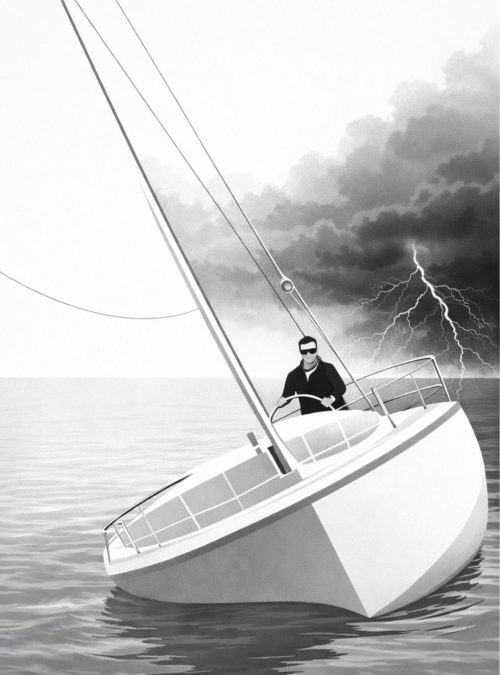
At some point in our career, we have all encountered a manager whose real contribution is difficult to define.
You genuinely wonder how they ever reached such a level of responsibility while contributing so little.
Some of them have a remarkable ability to navigate organisational politics, particularly in large organisations. These are the managers we never see during turbulent times, but they reappear as soon as results are good and are often the first to take credit for them.
They are the ones who step into the spotlight after the team has spent weeks working evenings and weekends to catch up on deadlines, correct mistakes and meet demanding client expectations. Conversely, they are quick to point the finger at a team member as soon as a problem arises. They are always visible in the photo when the CEO visits the offices, but absent when the time comes to guide, decide or provide support.

So yes, we might acknowledge a particular kind of talent here: the ability to read the environment, understand unwritten rules and manage political dynamics.
The real challenge for the company is to distinguish between managers who succeed by motivating their teams and those who shine at their expense.
The first type values and develops employees; the second achieves results by wearing them down.
Fortunately, this difference is measurable. Key indicators are turnover rates, absenteeism, engagement or pulse survey results and perception gaps between top-down and bottom-up feedback during 360 reviews.
A balanced combination of digital tools, solid HR data and qualitative insights provides a clear view of the managerial climate. These indicators speak for themselves, even if some remain harder to identify than others.
The issue is just as strategic for employees. How do you deal with this kind of manager? In conversations with employees at all levels, we regularly hear comments such as, “I can’t stand my manager anymore. I do all the work and he/she reaps all the benefits. I don’t know what to do at this point. I’m thinking of resigning.”
Direct confrontation is seldom effective when facing someone skilled in internal politics. A better approach is to observe, understand the dynamics at play, act intelligently and above all plan an exit towards a healthier environment.
This requires finesse, consistency and a good measure of self-sacrifice, but it is also an essential career skill.
Because, whether we like it or not, we have all crossed paths with someone who avoids pulling their weight.
And knowing how to recognise them is already a step toward freeing yourself from their impact.