This article emerged from a recent discussion with executives and managers, and from a powerful insight: many leaders have been trained for stability in a world that is no longer stable. They now have to operate in an environment for which they were never truly prepared.
For a long time, the context allowed for structured, cautious, almost “natural” management. As long as growth continued and the markers remained clear, steady, risk-averse leadership was enough.
That era is over. With persistent inflation, geopolitical tensions, technological disruption, regulatory pressure, talent shortages and volatile markets, instability is no longer a passing phase. It has become the new reality. And waiting for a return to “normal” often means waiting for something that never comes.
It is precisely in this kind of environment that true leaders stand out, while others fade into the background.
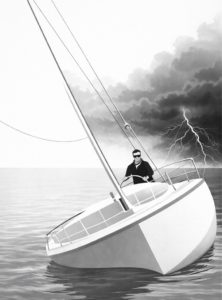
In times of turbulence, overly cautious leadership becomes a risk. Decisions are delayed; messages lose their impact and organisations ends up reacting to events instead of shaping them. It is not uncertainty that is the danger, but a lack of direction.
When a company suddenly experiences a significant drop in revenue, whether through the loss of a key client, more aggressive competition or a market downturn, two distinct responses tend to surface. For some, the instinct is to hesitate, hold endless meetings and postpone difficult decisions. Time passes, energy drains away and doubt begins to take hold. By contrast, others decide quickly and are willing to make unpopular choices regarding what to let go, what to protect and what to push forward. In moments of urgency, silence is not wisdom, it is avoidance.
In these circumstances, teams do not want a manager, but a leader. They look to someone who takes responsibility, makes decisions, provides clarity and remains present when the pressure mounts.
Leadership today is no longer measured by career paths, job titles or CVs. It is built on far more demanding foundations: clear judgement, agility, courage, resilience, and the ability to speak the truth, engage others and drive transformation, even when the stakes are high. In this context executive search is also evolving. It is no longer simply about identifying strong profiles, but about finding leaders who can resolve ambiguity and guide organisations through uncertainty.
Fair-weather leadership is a thing of the past.
The future belongs to those who can remain steady in turbulent times and lead their teams with clarity, energy and courage.